Coating Fabrication Service About
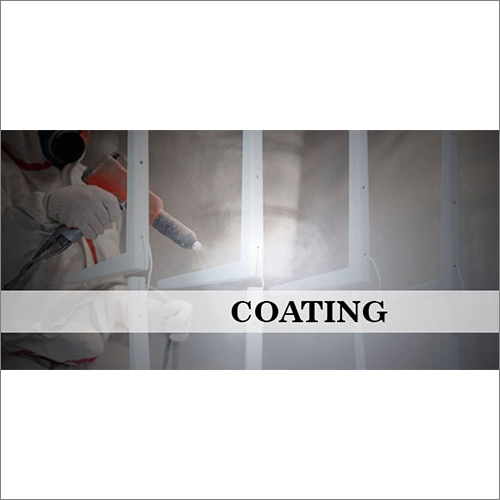
Coating Fabrication Service refer to processes and activities where vendors apply a thin layer of material to preserve, protect and aesthetically improve products and their surfaces. It is commonly done on newly produced, manufactured or invented products. These services find extensive application in construction, industrial, automotive, aviation, automation and manufacturing industries. Coating Fabrication Services assist in fighting against rusting and corrosive elements, enhancing durability, convenience, appearance, reducing friction and improving chemical resistance. These services help in protecting the objects and products, assuring a longer lifespan and keeping the products and machine clean.
Flexible Service ModesWe offer both onsite and offsite coating fabrication services to suit your operational needs. Our team can arrive at your facility for large or complex projects, or you may choose to have items coated at our specialized facility. This flexibility ensures seamless integration with your production schedule and minimum disruption to your workflow.
Custom Finishes & High-Performance CoatingsChoose from matte, glossy, or textured finishes in a spectrum of multi-color options tailored to your specifications. Our coatings, based on epoxy, polyurethane, or polyester formulations, deliver high bonding strength and robust protection against corrosion, while also being able to withstand harsh industrial environments and temperatures up to 250C.
Eco-Friendly Solutions with Quick TurnaroundWe prioritize sustainability by utilizing low-VOC coating materials, making our service environmentally responsible without sacrificing performance. Our efficient process ensures a lead time of just 7-10 working days, so you can rely on rapid delivery and consistent quality for all your metallic coating needs.
FAQ's of Coating Fabrication Service:
Q: How is the coating fabrication process carried out for industrial coating applications?
A: Our coating fabrication begins with thorough surface preparation, followed by powder coating using epoxy, polyurethane, or polyester powders as specified. The coating is applied evenly to achieve the desired thickness and finish, then cured at high temperatures for optimal adhesion and durability. The process is monitored to meet the required performance and safety standards.
Q: What substrate sizes can you accommodate for coating fabrication?
A: We offer full customization for substrate sizes to match your project requirements. Whether your components are small or large, our facilities and mobile teams are equipped to handle a wide range of dimensions, ensuring flexibility for diverse industrial applications.
Q: When can I expect my coated components to be ready?
A: Our standard lead time is 7-10 working days from receipt of final specifications and approval. This timeline includes all stages, from surface preparation to final inspection, ensuring timely delivery without compromising on quality.
Q: Where do you offer your coating fabrication services?
A: Our services are available Pan India, either onsite at your location or at our own advanced coating facility, depending on your preferences and project requirements. We cater to clients across the country with efficient logistics and service support.
Q: What are the benefits of choosing your coating fabrication service?
A: Our service delivers robust corrosion resistance, high bonding strength, and aesthetic flexibility through custom finishes and colors. With eco-friendly, low-VOC coatings and the ability to withstand industrial operating temperatures up to 250C, our solutions ensure extended protection and longevity for metal components.
Q: Which coating types do you offer, and how do I decide which is best for my application?
A: We provide epoxy, polyurethane, and polyester coatings. Epoxy is ideal for superior chemical resistance, polyurethane offers excellent flexibility, and polyester is suited for UV resistance. Our team can guide you in choosing the optimal coating based on your specific operational environment and functional needs.


 Send Inquiry


 Send Inquiry
 Send Inquiry
 Send SMS
 Call Me Free


 English
 Spanish
 French
 German
 Italian
 Chinese (Simplified)
 Japanese
 Korean
 Arabic
 Portuguese